Summary
With more than 10,000 miles of shoreline, Virginia’s coastal region is home to about 70 percent of the commonwealth’s population and much of its economic power, from the federal government centers of Northern Virginia to the the sprawling defense installations of Hampton Roads, where Naval Station Norfolk is the world’s largest naval base and enormous quantities of goods and resources like coal regularly transit the Port of Virginia.
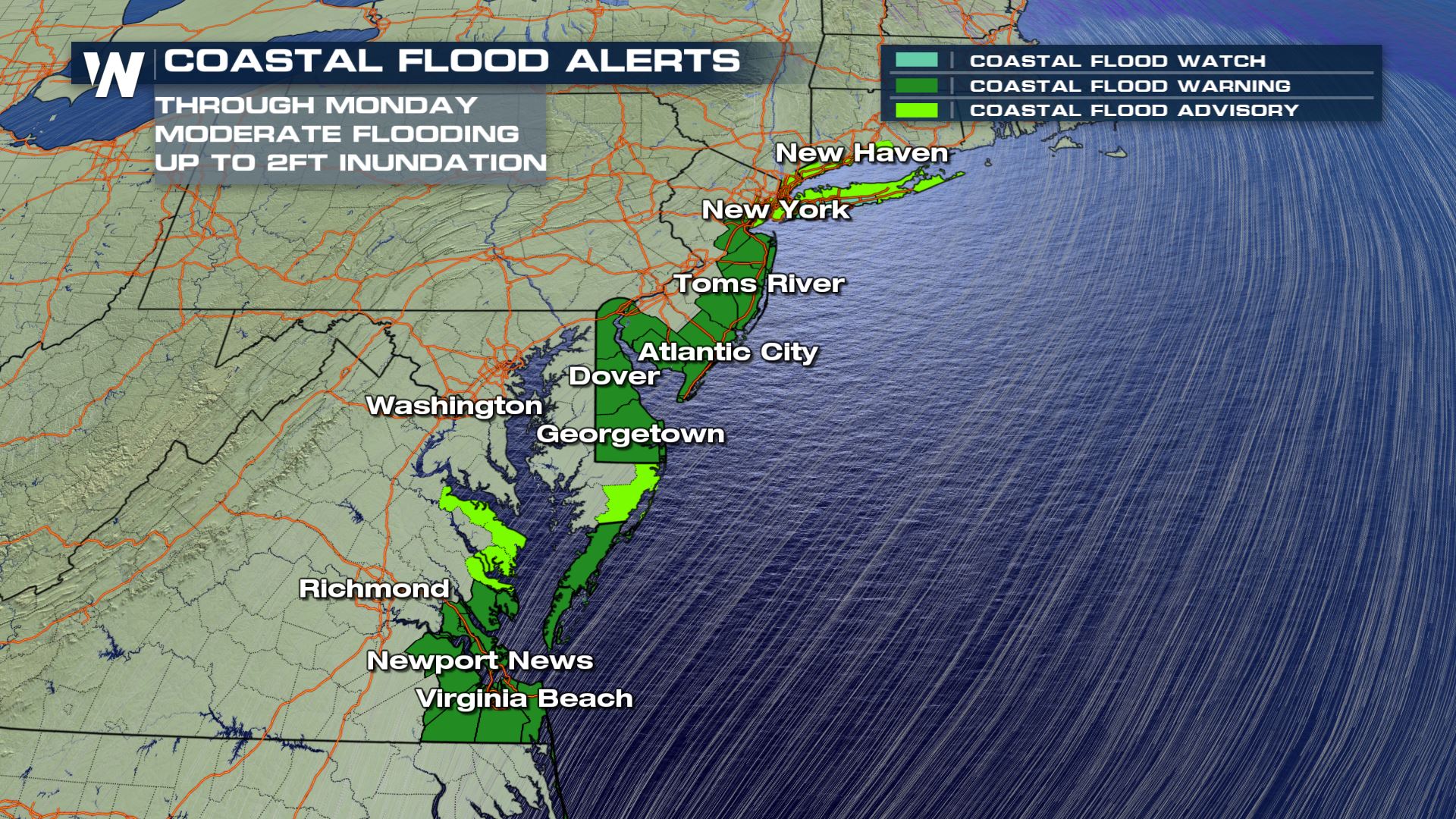
The National Oceanic and Atmospheric Administration, using data from Virginia’s longest-operating tide gauge at Sewell’s Point in Norfolk, has found that the state has seen more than 18 inches of relative sea level rise in the past 100 years. Agency projections show that under the highest sea level rise scenarios, Sewell’s Point could see water levels rise by almost 6.7 feet by 2100.
About
Source: Wikipedia
Congress
Senators Warner and Kaine
Senators’ position on Climate Change
Mark Warner
Senator Warner firmly believes that we need to reduce our dependence on foreign oil while investing in new technologies that reduce harmful emissions that contribute to climate change. He favors an “all of the above,” portfolio approach that employs solar, wind, bio-fuels, nuclear energy, next generation battery technologies, and investment in research that focuses on using carbon capture technology so we can continue to use our domestic resources, such as coal, more responsibly. The science surrounding climate change unequivocally supports the need for dramatic changes in policy, and Senator Warner believes any comprehensive legislation to address this issue must be balanced with the need to keep all sectors of our economy viable.
Similarly, the Commonwealth’s 3,300 miles of coastal resources provide significant economic contributions to tourism, recreation, commercial and sport fisheries, and wildlife enjoyment within our state. However, pollution, habitat loss, and other factors have taken their toll. Senator Warner believes that our federal and Bay state partners need to continue to work together to seek appropriate resources to preserve the Bay and he opposes any reductions in funding that threaten to erase progress made to restore the Bay’s oyster population and support local commercial fisheries.
From Mark Warner senate page
Go to Policy Areas > Environment to see more sponsored bills
Tim Kaine
When Tim Kaine was Governor in 2007, he established the Governor’s Commission on Climate Change (through Executive Order 59). The executive order also directed the Commission to create a Climate Action Plan that would evaluate expected impacts of climate change on Virginia’s natural resources, public health, agriculture, forestry, tourism, and insurance sectors.
Tim believes that America’s energy production should always be trending in the direction of cleaner tomorrow than today.
From the Chesapeake Bay to the Cumberland Gap, Virginia’s great outdoors are a priceless treasure that Tim is determined to safeguard for future generations to enjoy. Tim has long been an outspoken leader in support of clean energy and policies to combat climate change. As Governor, Tim put in place the Commonwealth’s first comprehensive clean energy plan. He supports investing in renewable energy, including offshore wind and solar, which would create new jobs and make Virginia a leader in clean energy development. Tim believes that by advancing an energy strategy that moves us from carbon-heavy to low-carbon, we can reduce pollution, bolster our national security, and create American jobs that cannot be outsourced.
After hearing concerns from local communities and the Department of Defense, Tim announced his opposition to opening Virginia’s coast to offshore oil and gas drilling. Tim has spoken out against the Trump Administration’s offshore drilling proposal that could threaten military assets in Hampton Roads as well as the environment and tourism industry. Tim has called on the Administration to listen to local voices on Virginia’s coast, which are overwhelmingly opposed to offshore drilling.
Virginia faces a unique set of challenges because of its coastal exposure to sea level rise caused by climate change, and Tim is committed to reducing this risk. He believes the U.S. should be an international leader on climate change and that President Trump’s decision to retreat from the Paris Climate Agreement is short-sighted. Tim believes the country that won World War II and the race to put a man on the moon should be able to cut approximately 1/4th of our carbon pollution by 2025. In the Senate, Tim has been a leader on efforts to combat sea level rise and flooding in Hampton Roads, which threaten readiness at local military installations and homes in the surrounding communities. Tim introduced the BUILD Resilience Act, which would spur investments in resilient infrastructure to reduce the risk of climate effects like flooding and extreme storms to communities like Hampton Roads. He has also been an advocate for protecting the Chesapeake Bay, Virginia’s National Parks like Shenandoah, its National Wildlife Refuges like Chincoteague, and its truly unique places like Tangier Island.
Tim respects the role coal production has historically played in traditional coal communities in Southwest Virginia, and as Governor, he supported the construction of the state-of-the-art Virginia City Hybrid Energy Center in Wise County, one of the most advanced clean coal plants in the United States. He recognizes the sacrifice coal miners have made over a lifetime of dangerous work, and he is fighting on behalf of them in the Senate so they receive their hard-earned pensions and health benefits. Tim has supported clean coal research funding that could help revitalize Southwest Virginia’s economy, and he has co-sponsored legislation to stimulate large-scale federal and private sector investment to reduce carbon pollution through advanced clean coal technologies.
Tim has also pushed for robust funding for heating assistance programs. He has continually joined colleagues of both parties to urge the President and Senate appropriators to boost funding for the Low Income Home Energy Assistance Program (LIHEAP) and Weatherization Assistance Program (WAP), two programs that play an important role in providing vulnerable populations and low-income households with affordable home energy.
From Tim Kaine’s senate page – see Related News for more proposals and bills sponsored by Tim Kaine
Bills Sponsored
Clean Economy Act – Tim Kaine and Mark Warner, have co-sponsored this legislation for the United States to reach net-zero greenhouse gas emissions by 2050. This bill would direct the Environmental Protection Agency to use existing authorities to put the U.S. on the path to achieving net-zero emissions by no later than 2050.
The release says any plan the EPA develops would have to achieve rapid reductions at minimal costs, prioritize public health, and support a strong labor workforce. The agency would also be required to build upon existing state, local and private climate programs and set emission reduction targets for 2025, 2030 and 2040.
Senate Committees
Senate Committee on Environment and Public Works oversees Global Warming related issues and bills. Here is there webpage. Senators Warner and Kaine do not sit on this committee.
Also see the he Senate Democrats’ Special Committee on the Climate Crisis’ report provides a framework for Congress to finally do what is necessary to build the clean energy future we all deserve.
Virginia US House Members
Key Members positions on Climate Change
Don McEachin (D), Virginia US House District 4, is a member of the U.S. House Select Committee on the Climate Crisis committee. Below is the information on McEachin’s government website related to the climate change.
Mr. McEachin proudly represents his district on the House Committee on Energy and Commerce, the Select Committee on the Climate Crisis and the House Committee on Natural Resources.
As a member of the House Committee on Energy and Commerce, Mr. McEachin sits on the Subcommittee on Communications and Technology, the Subcommittee on Energy, and the Subcommittee on Environment and Climate Change.
Mr. McEachin also serves on both the Energy and Mineral Resources and Oversight and Investigations subcommittees under the House Natural Resources Committee.
Congressman McEachin is a member of the following task forces and teams:
· United for Climate and Environmental Justice Taskforce (co-founder)
· Environmental Message Team
Congressman McEachin also serves as a member of the following caucuses:
· CBC Energy, Environment, and Agriculture Task Force (co-chair)
· Sustainable Energy and Environment Coalition (SEEC) (vice-chair)
· Chesapeake Bay Watershed Caucus
· Congressional PORTS Caucus
· Congressional Ship-Building Caucus
· Sustainable Energy and Environment Coalition
In October, Congresswoman Jennifer Wexton stated “I think it’s time also that we explore the issue of carbon dividends, to use market forces to incentivize the use of renewable energy over dirty fossil fuel.”
Carbon fee legislation like this exists in Congress now, known as the Energy Innovation and Carbon Dividend Act (H.R. 763). Congressman Gerry Connolly has co-sponsored H.R. 763, the Energy Innovation and Carbon Dividend Act.
House Select Committee on Climate Crisis
The U.S. House Select Committee on the Climate Crisis is charged with delivering ambitious climate policy recommendations to Congress “to achieve substantial and permanent reductions in pollution and other activities that contribute to the climate crisis.”
The committee was authorized by House Resolution 6 on January 9, 2019 and will publish a set of public recommendations by March 31st, 2020. Its members include experts in environmental justice, coastal flooding, clean energy development and other issues that are vital for addressing the climate crisis.
Virginia
Governor Northam
Governor’s position on Climate Change
Press Releases
Governor Northam to Protect Virginia’s Environment, Fight Climate Change, and Grow the Clean Energy Economy
December 11, 2019
Proposed budget makes historic investments in Chesapeake Bay restoration, environmental quality and equity, clean energy, and offshore wind
Governor Ralph Northam said his budget will include $733 million in new funding for the environment and clean energy—including a half-billion-dollar capital investment.
The budget creates Virginia’s first Office of Offshore Wind. It also invests up to $40 million to upgrade the Portsmouth Marine Terminal, to secure new investments in the offshore wind supply chain. These investments will help Virginia achieve 2,500 megawatts of energy generated from offshore wind by 2026.
“In Virginia, we are proving that a clean environment and a strong economy go hand-in-hand—and having both is what makes our Commonwealth such a great place to live, work, and play,” said Governor Northam. “These significant investments in environmental protection, environmental justice, clean energy, and clean water will combat climate change and ensure we maintain our high quality of life here in Virginia.”
The proposed budget supports the Chesapeake Bay clean water blueprint Governor Northam released earlier this year with major investments to support local governments tackling stormwater pollution, upgrade wastewater treatment plants, and assist farmers implementing conservation practices to reduce farm runoff. When added to another $10 million for oyster reef restoration, these investments in clean water total more than $400 million and will put Virginia on track to meet the 2025 Bay cleanup deadline.
Governor Northam also proposed an additional $15.5 million investment for the Virginia Land Conservation Foundation grant program, bringing it up to $20 million each year, to support targeted land protection through the Governor’s groundbreaking ConserveVirginia initiative.
For more information, see press release.
Governor Northam Signs Clean Energy Legislation
April 12, 2020
Governor Ralph Northam is accelerating Virginia’s transition to clean energy by signing the Virginia Clean Economy Act and by amending the Clean Energy and Community Flood Preparedness Act that requires Virginia to join the Regional Greenhouse Gas Initiative.
“These new clean energy laws propel Virginia to leadership among the states in fighting climate change,” said Governor Northam. “They advance environmental justice and help create clean energy jobs. In Virginia, we are proving that a clean environment and a strong economy go hand-in-hand.”
The Virginia Clean Economy Act was passed as House Bill 1526 and Senate Bill 851, which were sponsored by Delegate Richard C. “Rip” Sullivan, Jr. and Senator Jennifer McClellan, respectively. The Act incorporates clean energy directions that the Governor issued in Executive Order Forty-Three in September 2019. It results from extensive stakeholder input and incorporates environmental justice concepts related to the Green New Deal.
The law requires new measures to promote energy efficiency, sets a schedule for closing old fossil fuel power plants, and requires electricity to come from 100 percent renewable sources such as solar or wind. Energy companies must pay penalties for not meeting their targets, and part of that revenue would fund job training and renewable energy programs in historically disadvantaged communities. The Act accomplishes the following broad goals:
- Establishes renewable portfolio standards. The Act requires Dominion Energy Virginia to be 100 percent carbon-free by 2045 and Appalachian Power to be 100 percent carbon-free by 2050. It requires nearly all coal-fired plants to close by the end of 2024.
- Establishes energy efficiency standards. The Act declares energy efficiency pilot programs to be “in the public interest.” It creates a new program to reduce the energy burden for low-income customers, and it requires the Department of Social Services and the Department of Housing and Community Development to convene stakeholders to develop recommendations to implement this program. The Act sets an energy efficiency resource standard, requiring third party review of whether energy companies meet savings goals.
- Advances offshore wind. The Act provides that 5,200 megawatts of offshore wind generation is “in the public interest.” It requires Dominion Energy Virginia to prioritize hiring local workers from historically disadvantaged communities, to work with the Commonwealth to advance apprenticeship and job training, and to include an environmental and fisheries mitigation plan.
- Advances solar and distributed generation. The Act establishes that 16,100 megawatts of solar and onshore wind is “in the public interest.” The law expands “net metering,” making it easier for rooftop solar to advance across Virginia. The new law requires Virginia’s largest energy companies to construct or acquire more than 3,100 megawatts of energy storage capacity.
The Clean Energy and Community Flood Preparedness Act was passed as House Bill 981 and Senate Bill 1027, sponsored by House Majority Leader Charniele Herring and Senator Lynwood Lewis, respectively.
The Act establishes a carbon dioxide cap-and-trade program to reduce emissions from power plants, in compliance with the Regional Greenhouse Gas Initiative (RGGI). The Department of Environmental Quality will establish and operate an auction program to sell allowances into a market-based trading program.
The Act creates a Virginia Community Flood Preparedness Fund to enhance flood prevention, protection, and coastal resilience. It creates a low-interest loan program to help inland and coastal communities that are subject to recurrent flooding. The sale of emissions allowances would fund it.
The Governor proposed technical amendments to clarify how the fund would operate. The amendments provide for forgiveness of loans used in low-income geographic areas.
Governor Northam Announces New Actions to Improve Coastal Resilience, Address Flooding Caused by Climate Change
December 3, 2020
As the Commonwealth continues to experience flooding and extreme weather events exacerbated by climate change, Governor Ralph Northam today announced new executive actions to improve coastal resilience and protect Virginia communities.
The three actions include (1) elevating the Virginia Coastal Zone Management Program to report to the Commonwealth’s Chief Resilience Officer, (2) issuing a statewide request for proposal for technical engineering assistance in developing the Virginia Coastal Resilience Master Plan, and (3) formally establishing the Virginia Coastal Resilience Technical Advisory Committee. These steps will directly support the Virginia Coastal Resilience Master Planning Framework announced in October.
“Virginia is increasingly experiencing intense storms and flooding due to climate change, endangering our environment and natural resources, public health and safety, and the economic well-being of the Commonwealth,” said Governor Northam. “We must act now to mitigate these threats and protect lives and livelihoods, and these actions will bolster our ongoing work to build coastal resilience and maintain thriving communities.”
State Senate
Members’ position on Climate Change
Commenting on passage of Clean Energy Economy Act
“This is the most significant clean energy law in Virginia’s history,” said Senator Jennifer McClellan. “The bill that the Governor signed will make Virginia the first southern state with a 100 percent clean energy standard. The Act will create thousands of clean energy jobs, make major progress on fighting climate change, and break Virginia’s reliance on fossil fuels.”
In the General Assembly, a joint resolution put forward during the 2020 regular session by Del. Elizabeth Guzman, D-Prince William, that declared “global warming caused by human activity that increases emissions of greenhouse gases has resulted in a climate and ecological emergency” was received along partisan lines in the House, with all support coming from Democrats and all opposition from Republicans. The resolution died in the Senate Rules Committee, where Chair Mamie Locke, D-Hampton, and Senate Majority Leader Dick Saslaw, D-Fairfax, told Guzman the Senate no longer approves resolutions memorializing the legislature’s position or “foreign policy resolutions.”
From Virginia Mercury article
State Senate Committees
Agriculture, Conservation and Natural Resources Committee
House of Delegates
Members’ position on climate change
At session’s midpoint, unprecedented progress on climate, clean energy
From Virginia Mercury article by Michael Town, Feb. 23, 2020
The new “Conservation Majority” at the General Assembly has broken the logjam when it comes to protecting clean air, clean water and our natural resources. Post-crossover, we have close to 100 good pieces of legislation still moving, and for the first time in Virginia’s history, we’re very close to passing serious legislation to address climate change.
On the last day before the midway point of session known as crossover, the House of Delegates and Senate of Virginia passed the most comprehensive and bold package of clean energy and climate action legislation that Virginia’s ever seen. The Virginia Clean Economy Act reduces carbon emissions from the electric sector to zero by 2050 at the latest.
In addition to advancing the Virginia Clean Economy Act, both chambers have also passed legislation finalizing Virginia’s membership in the Regional Greenhouse Gas Initiative, connecting the Commonwealth to a highly successful, multi-state carbon cap-and-invest program. Over the past decade, this program has returned huge economic, environmental and public health gains to its 10 member states, almost every state to the north of us on the East Coast.
“This is the most significant clean energy law in Virginia’s history,” said Senator Jennifer McClellan. “The bill that the Governor signed will make Virginia the first southern state with a 100 percent clean energy standard. The Act will create thousands of clean energy jobs, make major progress on fighting climate change, and break Virginia’s reliance on fossil fuels.”
Carbon fee legislation like this exists in Congress now, known as the Energy Innovation and Carbon Dividend Act (H.R. 763). General Assembly members Ghazala Hashmi, Sam Rasoul, Dave Marsden, Ken Plum, Ibraheem Samirah, Rodney Willett and Dan Helmer have endorsed it.
House of Delegates Committees
Agriculture, Chesapeake and Natural Resources Committee
Organizations
Educational
Virginia Conservation Network-
804.644.0283
Mission: Committed to building a powerful, diverse, and highly-coordinated conservation movement focused on protecting our Commonwealth’s natural resources.
Environmental Groups in Virginia
Environmental Organizations – Eco-USA
Environment Virginia Research & Policy Center
Environment Virginia Research & Policy Center is a project of Environment America research & Policy Center, which is a 501(c)(3) organization. We are dedicated to protecting our air, water and open spaces. We investigate problems, craft solutions, educate the public and decision-makers, and help the public make their voices heard in local, state and national debates over the quality of our environment and our lives.
Nonprofit lobbyists
Business lobbyists
Dominion Energy
Dominion Energy Announces Support for Task Force on Climate-related Financial Disclosures
Press release, Nov. 9, 2020
Dominion Energy has declared its support for the Task Force on Climate-related Financial Disclosures (TCFD), which provides guidance to organizations on providing information to investors, lenders, insurers, and others on the business risks and opportunities presented by climate change.
“Greater transparency regarding climate-related risks and opportunities is a competitive advantage,” said president and chief executive officer Robert M. Blue. “It enables shareholders, customers, and other stakeholders to see alignment among our strategy of building a clean and sustainable energy future, our goal of achieving net zero emissions by 2050, and the opportunities arising from a shift to a low-carbon world. These disclosures also demonstrate our efforts to provide investors with consistency when evaluating and quantifying the impact of climate change on our business.”
From The Intercept, Nov. 6, 2019
The stunning victory on Tuesday by Virginia Democrats, seizing control of both chambers of the state legislature and bringing the state under unified party control, sets up a new confrontation with a powerful adversary: Dominion Energy.
Dominion Energy, the privately owned utility company, has long cast a shadow across the state, buying favor in both parties as the most generous donor in state history, writing its own lax regulatory rules, and funneling consumer bills into billions of dollars of investor dividends and executive compensation.
The election results mark a turning point that will likely transform into a brutal legislative fight in 2020 over the future of energy policy, corporate consolidation, and climate change. Virginia Democrats were once just as loyal to the energy giant as Republicans, dutifully passing nine-figure tax breaks year after year for Dominion, alongside other giveaways directly requested by the company’s lobbyists. Dominion lobbyists have crushed attempts to allow consumers to use “net metering,” or the use of rooftop solar power to send electricity back to the grid in exchange for credits, and passed laws specifically crafted to dodge limits on pollution by coal power plants.